
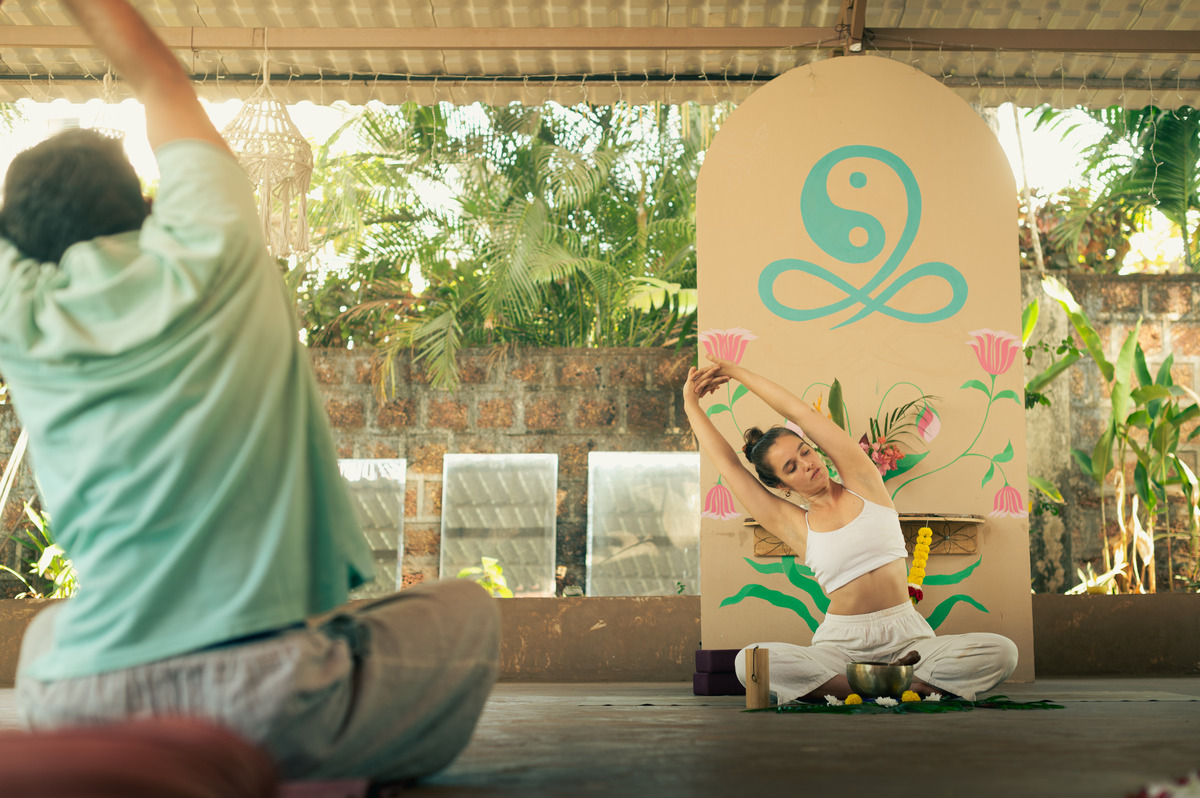
How do you go from someone who loves yoga to someone who’s qualified to teach it? It’s a question a lot of dedicated practitioners eventually ask themselves, usually after a few years of regular classes and a growing curiosity about what happens on the other side of the mat. The answer involves a recognised training, some honest self-reflection, and a decision about where and how you want to learn. Here’s what the path actually looks like.
The path usually starts with a foundational teacher training course. Requirements vary by studio, country, and tradition, but a 200-hour training is widely accepted as the entry point for teaching yoga professionally.
What Is a Yoga Teacher Qualification?
A yoga teacher qualification comes from completing a structured teacher training programme, most often 200 hours through a Yoga Alliance Registered Yoga School. It covers philosophy, anatomy, teaching methods, and supervised practice, not just postures, and lets you apply for Yoga Alliance registration once you graduate.
A well-rounded course goes beyond physical postures. It includes yoga philosophy, anatomy, teaching methodology, sequencing, breathwork, meditation, ethics, and supervised teaching practice.
Yoga Alliance requires RYT applicants to prove they completed training at a registered school, with a track such as 200-hour, 300-hour, or 500-hour (yogaalliance.org). Technically, Yoga Alliance registers schools and teachers rather than certifying every graduate directly.
Step 1: How Do You Build a Consistent Personal Practice?
Before enrolling in a teacher training, build a real relationship with yoga through several months of regular practice. You don’t need advanced postures. What matters is understanding how breath, alignment, and stillness feel in your own body before you try to guide someone else through them.
A solid foundation covers how postures feel in the body, the role of breath, basic alignment, and the discipline it takes to guide others safely.
Try a few different styles, such as Hatha, Vinyasa, Ashtanga-inspired, Yin, or restorative, before you commit to a training. This helps you find what actually resonates with you.
Step 2: Why Do You Want to Teach Yoga?
Not everyone starts a teacher training with the same goal. Some want to teach full-time, some want to lead community classes, and others simply want to deepen their own knowledge. Getting clear on your reason first helps you choose the right course format and teaching style.
Ask yourself:
- Do you want to teach in studios, gyms, retreats, or wellness centres?
- Are you more interested in your own practice?
- Would you like to specialise later in prenatal, therapeutic, or children’s yoga?
- Are you looking for personal transformation as much as a qualification?
Your answers will shape the course format, location, and teaching style that suit you. It’s also worth checking what local employers expect from new teachers before you enrol.
Step 3: How Do You Choose the Right 200-Hour Teacher Training?
Look for a 200-hour programme through a Yoga Alliance Registered Yoga School with a clear syllabus, experienced lead teachers, real practice-teaching opportunities, and honest mentorship. The RYT 200 pathway is the most widely recognised starting point, and a growing number of students now travel to India for it.
Yoga Alliance describes the foundational 200-hour training as a base in techniques, philosophy, anatomy, and ethics (yogaalliance.org). Teaching yoga takes more than demonstrating poses.
When comparing programmes, look for:
- A clear syllabus
- Experienced lead teachers
- Real practice-teaching opportunities
- Anatomy and safety education
- Philosophy study
- Meditation and pranayama training
- A certificate that studios will actually recognise
Where you train matters too. A growing number of international students from Europe, the Middle East, and the US now travel to India to complete their 200-hour training, drawn by the immersive, full-time format and yoga’s deep roots there. Sohum Yoga School, based in Arambol, Goa, runs a 21-day 200-hour Yoga Alliance-certified training that blends classical Hatha yoga with somatic movement, in small batches capped at 14 students so every trainee gets real mentorship.
A good yoga instructor certification should leave you knowledgeable and teachable, not just credentialed. The best programmes build a foundation for lifelong learning, not instant mastery.
Step 4: How Long Does It Take to Become a Certified Yoga Teacher?
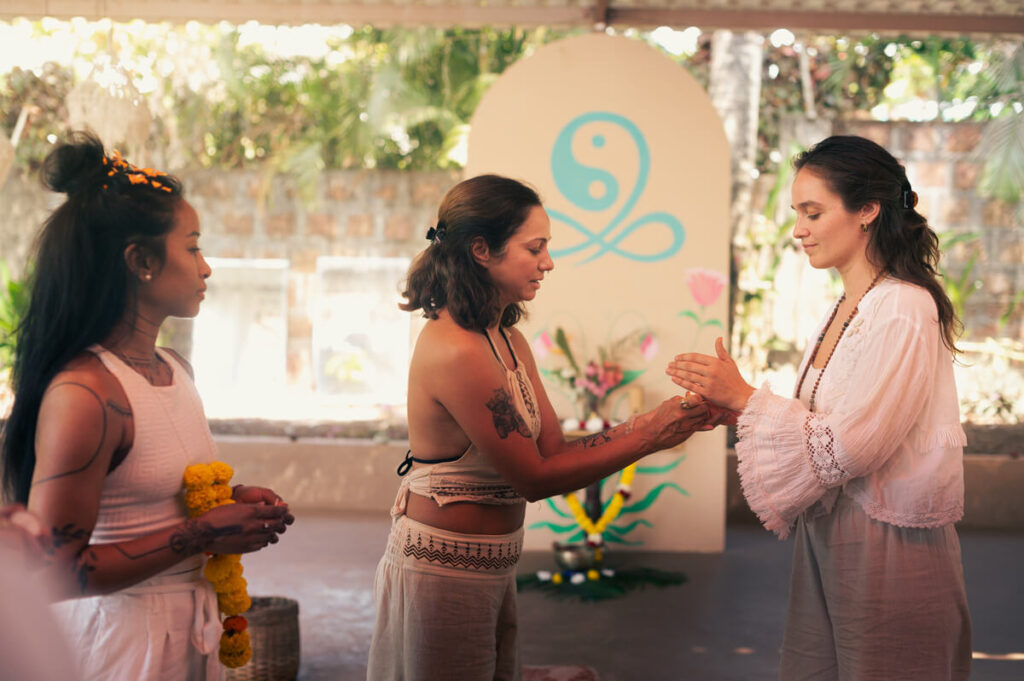
A 200-hour programme can run as an intensive course over a few weeks, a part-time weekend format over several months, or a hybrid with online and in-person components. The total training hours stay the same either way, but an intensive residential course, like a 21-day training in Goa, suits full immersion best.
A part-time course closer to home may suit students juggling work or family. Neither format is automatically better.
The right choice is whichever lets you absorb the material and actually integrate yoga into your life.
Step 5: How Much Does Yoga Teacher Training Cost?
Yoga teacher training cost varies by location, school reputation, course length, accommodation, and meals. A residential 200-hour course in a place like Goa typically falls between €1,300 and €2,000, depending on the school and room type, and the tuition fee is rarely the only expense to budget for.
Beyond tuition, budget for:
- Travel to and from the training
- Accommodation and meals, if not already included
- Books or manuals
- Props or practice clothing
- Insurance after graduation
- Registration fees if you join a professional body
A lower advertised price doesn’t always mean better value. A higher one that includes accommodation, meals, and mentorship can work out more complete overall.
Step 6: What Do You Need to Complete During Training?
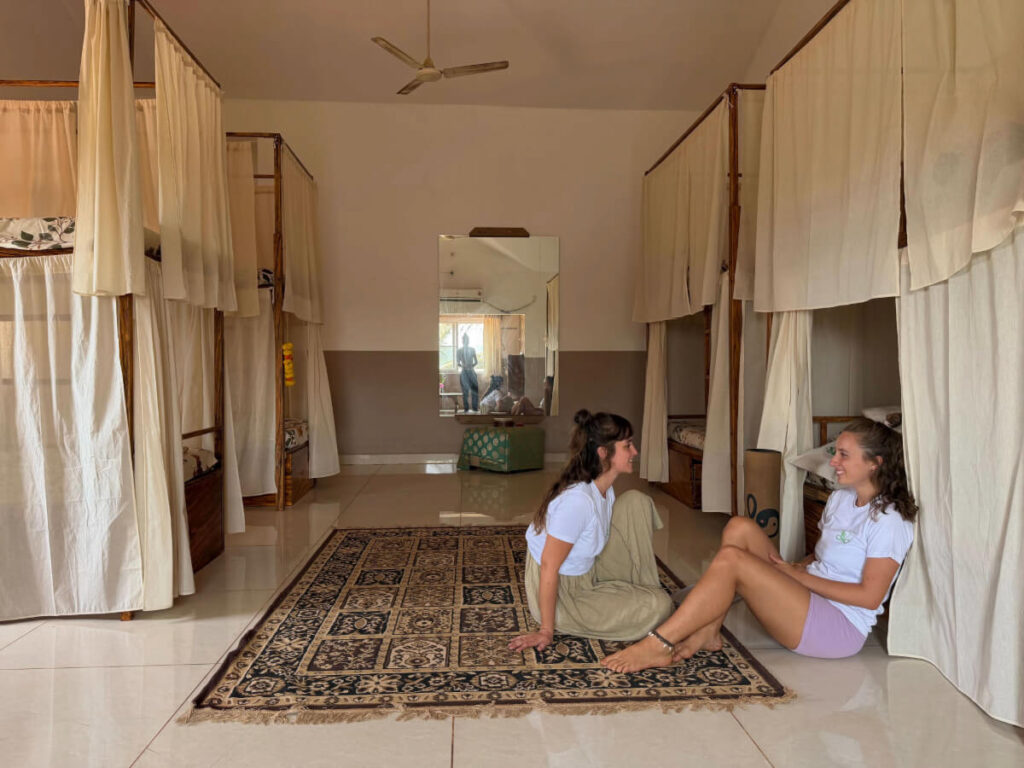
Most 200-hour programmes require you to study posture families, sequencing, anatomy, philosophy, meditation, pranayama, and teaching skills, then pass practical teaching assessments. Full attendance and completed assignments are usually mandatory, since the certificate reflects hands-on readiness to teach, not just hours attended.
Approach the training as a student first. Take notes, ask questions, and stay open to feedback.
Teacher training can bring up physical, emotional, and mental challenges, and that’s part of the process. Learning to stay present through discomfort helps you become a more compassionate teacher later.
Step 7: How Do You Register as a Certified Yoga Teacher?
After graduation, you can apply through Yoga Alliance for RYT 200 status if your training is eligible, submitting proof of completion from a registered school (yogaalliance.org). Registration isn’t always legally required to teach, but many studios and retreat centres treat it as a useful professional benchmark.
Rules vary by country and employer. If you still have questions about certification, visas, or what to expect, our FAQ page covers the details.
Step 8: How Do You Start Teaching After Certification?
Start with realistic opportunities such as small group classes, community sessions, online classes, or substitute teaching. Practise building class plans, managing time, and adapting for different students, since confidence grows through experience and repetition, not from trying to be perfect on day one.
Teach what you know and stay within your scope. Never stop being a student yourself.
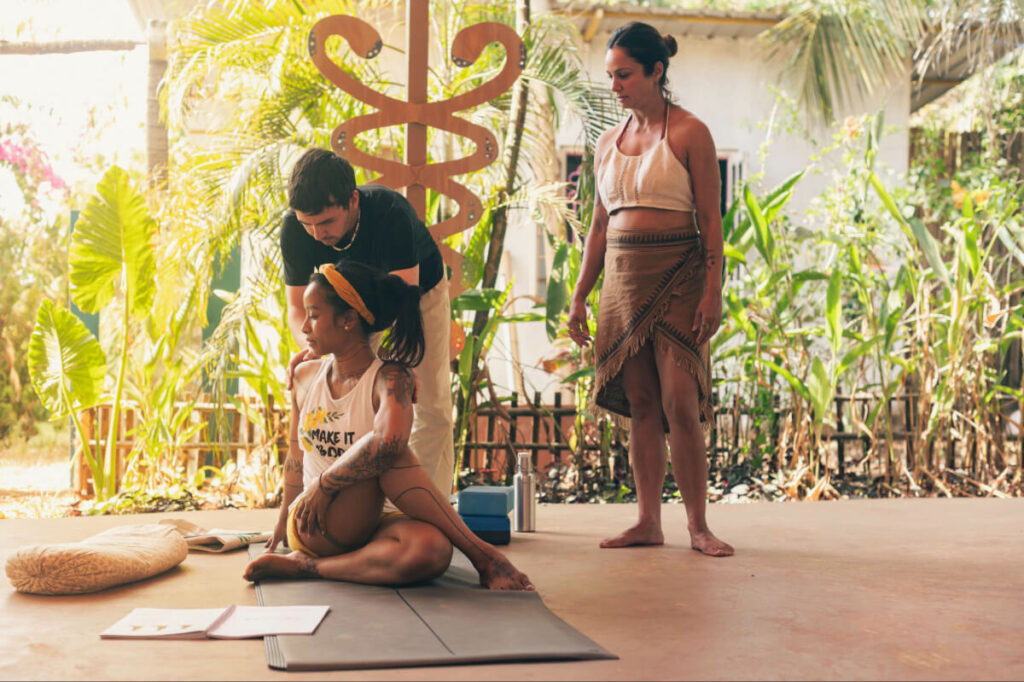
Begin Your Yoga Teaching Journey
If you feel called to share yoga, the path begins with sincere practice, the right training, and a willingness to keep growing. Choosing a supportive school makes a real difference in how prepared you feel after graduation.
Sohum Yoga School in Arambol, Goa, offers a Yoga Alliance-certified 200-hour teacher training that blends traditional Hatha yoga with somatic movement, small batches, and mentorship that continues after you graduate. If you’re ready to take the next step, get in touch to ask any questions first.
Frequently asked questions
What qualifications do I need to teach yoga?
Most professional studios expect a recognised yoga instructor certification, usually at the 200-hour level, though yoga itself isn’t regulated like medicine or formal education. You may also need liability insurance, first aid training, and a clear understanding of modifications, depending on where and how you plan to teach.
If you plan to teach internationally, check expectations in your target region first.
Is a 200hr TTC enough to teach yoga professionally?
Yes, for most new teachers. A thorough 200-hour TTC is enough to begin teaching professionally at an entry level, provided you keep practising after graduation, and it gives you the foundation to lead general classes for beginners and mixed-level students. A 200-hour course is the beginning of your education, not the end of it. Many teachers continue with mentorship, advanced training, or a 300-hour programme afterward. The most successful teachers keep learning long after certification. They watch experienced instructors, refine how they cue and speak, and listen carefully to their students.